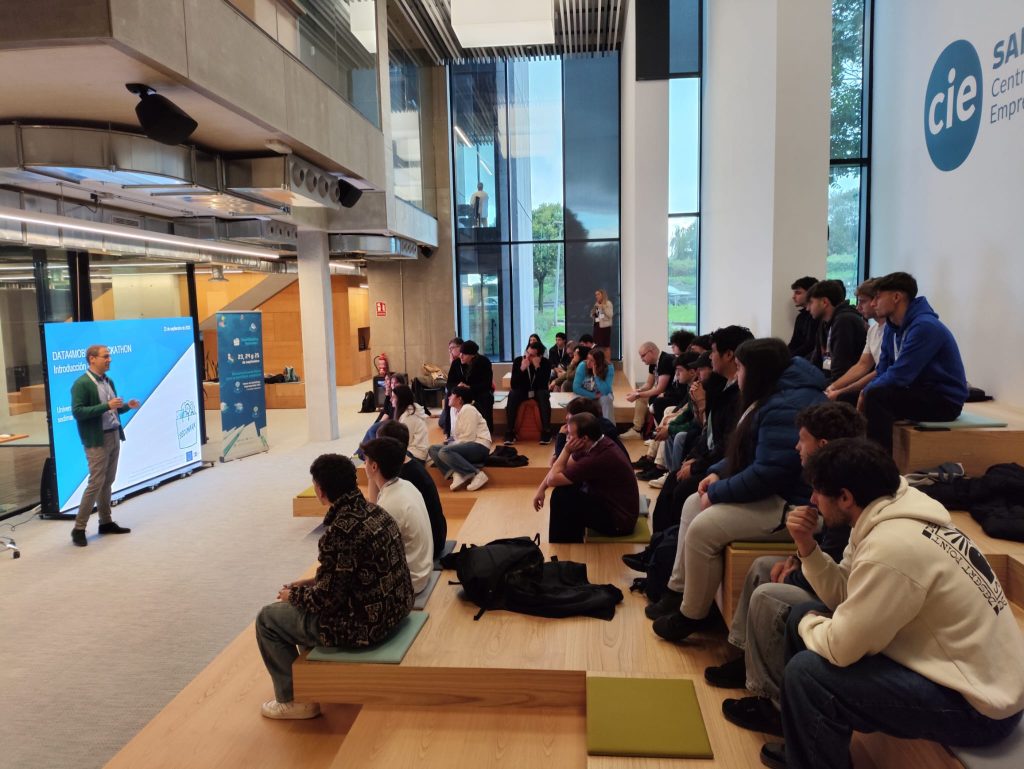
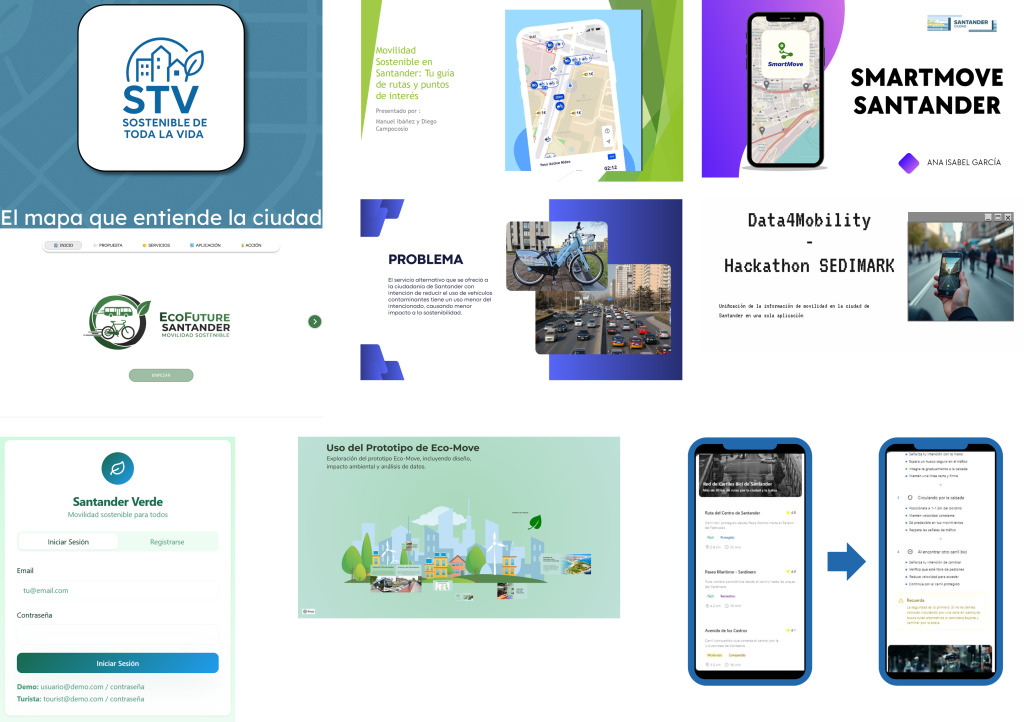
The Data4Mobility Hackathon, organized under the SEDIMARK project between the 23rd and 25th of September, successfully brought together creative minds to explore innovative solutions using the SEDIMARK Marketplace and data platform.
A total of 34 participants registered for the event, forming teams of up to two people. The hackathon kicked off with an opening ceremony attended by the Mayoress of Santander and the Vice-Chancellor for Research and Innovation from the University of Cantabria. Participants then joined a three-hour introductory session, where they learned how to use the SEDIMARK tools available for their projects.
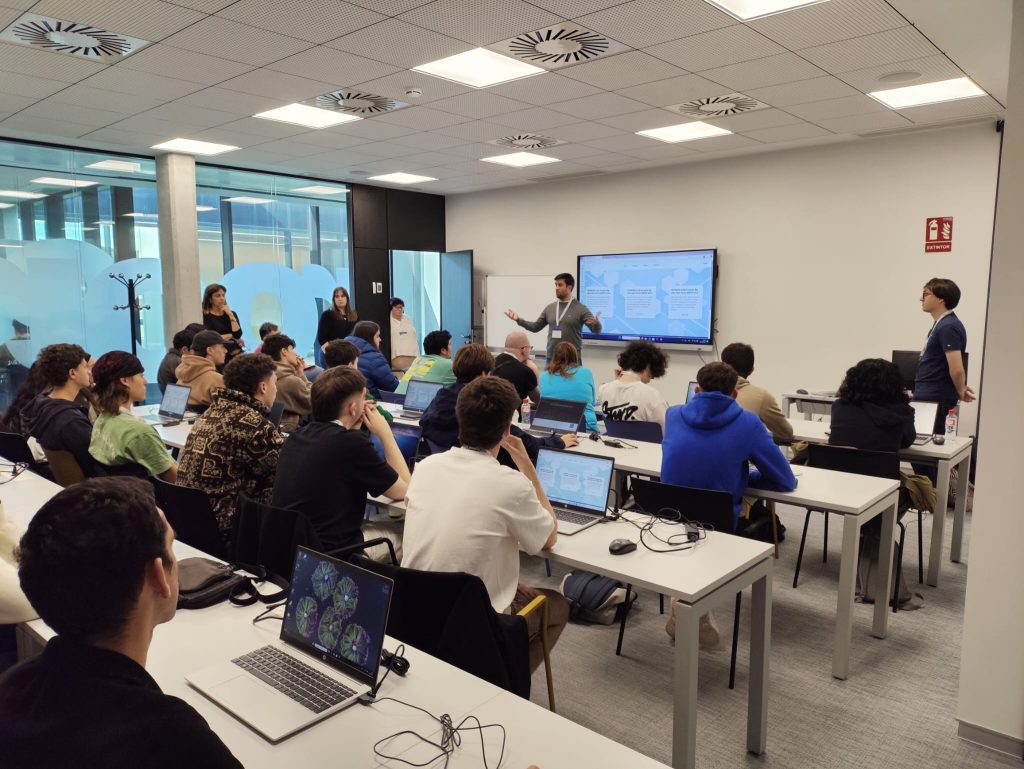
Over the two-day competition, participants worked intensively on their ideas, supported by members of the SEDIMARK project team. Out of all participants, eight teams (13 people) reached the final stage and formally presented their projects.
Following the event, a feedback survey revealed very positive results:
From a technical perspective, some performance and scalability challenges were observed early on when multiple users accessed demanding features simultaneously. These issues were quickly resolved by increasing computational resources.
Overall, the hackathon proved to be an excellent testing ground for the SEDIMARK Platform, offering valuable insights from real users and demonstrating the potential of integrating diverse datasets within a single marketplace.
On September the 15th the Special Session on “Technologies for trustworthy sharing of enriched and interoperable data in IoT-based data spaces”, organized by the SEDIMARK project, has been held as part of the during the IEEE Conference on Standards for Communications and Networking (held in Bologna, Italy).
The Special Session aimed to bring together experts in the areas of data management, data sharing, IoT, trust and machine learning and provide a floor for discussions on how various technologies (e.g. machine learning, artificial intelligence, semantics, DLTs, etc.) can help towards automating and improving the management, curation, enrichment, interoperability and sharing of data in IoT-based data spaces.
Four papers were accepted after thorough review from a panel of more than twenty experts who provided their reviews over the nine manuscripts that were submitted. The four papers, titled "Towards Efficient Structured Description Generation for Data Marketplace Offerings", "A Decentralised DLT-based Offering Management and Asset Sharing Framework for Data Marketplaces", "Optimizing Deep Learning for Edge Deployment via Weight Statistics Aware Network Pruning", and "Quantifying Energy-Accuracy-Latency Trade-offs in Cloud-Offloaded and On-Device TinyML Inference on IoT Devices", were presented by Dr. Tarek Elsaleh (from University of Surrey, UK), Mr. Victor González (from Universidad de Cantabria, Spain), Miss Sneha Hanumanthaiah (from University of Surrey, UK) and Dr. Horia Alexandru Modran (from Transilvania University of Brasov, Romania) respectively.
This session has been an excellent opportunity to present some of the key results from the project as the papers presented were all describing some of the latest results and outcomes from the project. More than 20 people attended the session where a lively discussion (e.g. on integration with other frameworks like TM Forum APIs, or on availability of the datasets used for AI-enabled data processing techniques presented) was established both at the questions and answers time after each paper presentation and at the end of the session when an open discussion was organized by the session chair.
During the next 23rd to 25th September 2025, the SEDIMARK: Data4Mobility Hackathon will take place in Santander, at the “Centro de Iniciativas Empresariales" (CIE).
Registration is open until noon 23rd September. Go and visit the following link to register yourself to this big opportunity:
As part of the SEDIMARK project, in which Santander City Council and the University of Cantabria are participating, a hackathon will be held inviting developers, designers, urban planners and data experts to explore the future of sustainable mobility in cities through the power of data. Participants will have access to the tools developed by the project to share real-world urban data and datasets, and they will be able to discover how the exchange of reliable data through the SEDIMARK Data Marketplace can drive innovation in mobility, the environment and urban planning.
The initiative has been organized to be ideal for developers, data scientists, researchers, and anyone interested in smart cities, sustainability, mobility, advanced data ecosystems, or SEDIMARK Data Market technologies. However, it will be open to anyone who were curious about exploring data applications and wants to develop innovative ideas using data as a foundation. The main objective for the SEDIMARK Data4Mobility Hackathon is to revolve around the data catalogues available in the Data Marketplace developed in the SEDIMARK project. These include real urban datasets related to sustainable mobility, places of interest in cities, traffic flows and air quality, not only in the city of Santander but also in other Spanish and European cities. Participants have had the opportunity to experiment with static and real-time data to jointly create services and ideas for smarter and more sustainable urban mobility.
Hackathon’s participants will be using the tools developed in the SEDIMARK project to search for and obtain the datasets available in the Data Marketplace that has been built as part of the project.
Technical training, documentation and details about the available datasets will be provided to participants at the beginning of the hackathon, examples from these datasets are:
In addition, during the hackathon, a team of developers from the SEDIMARK project will be available to answer questions and provide support to participants in all matters relating to the use of the tools and datasets of the SEDIMARK Data Marketplace, both on site and through telematic channels that will be made available for this purpose.
All the details can be found at the following document.
Last month we hosted our webinar: “Introduction to the SEDIMARK Toolbox”, bringing together stakeholders from research, industry, and policy to explore how secure, interoperable data marketplaces can be built on top of the Data Space concept.
💡 Highlights from the session:
An overview of the SEDIMARK platform and its role in enabling secure, privacy-preserving, and efficient data exchange.
A live demo using the water use-case to showcase our data/ML pipelines in action.
Engaging Q&A and open discussions on edge performance, decentralized architectures, and federated learning.
🙏 Special thanks to all attendees for your insightful questions and to our partners for their collaboration.
📬 Stay tuned for upcoming webinars and project updates — subscribe to our newsletter here: https://sedimark.eu/newsletter/
#DataSpaces #DataMarketplace #Interoperability #AI #Webinar #DigitalEurope
We recently held a hands-on, hybrid technical meeting in Paris dedicated to refining and optimizing the data and machine learning pipelines in SEDIMARK. The session brought together team members on-site and online to work through practical implementation details, address technical challenges, and identify improvements to enhance efficiency, interoperability, and security across the platform.
The SEDIMARK project will be featured at Open Source Community Day 2025! Join us in Madrid on 23–24 September for this two-day event focused on boosting open source innovation through collaboration and community.
Tarek Elsaleh, representing SEDIMARK, will be one of the confirmed speakers — bringing insights into how EU-funded open source solutions are shaping the future of data sharing and innovation in Europe.
Co-organised by the Eclipse Foundation and the CEI-Sphere project, and co-located with the #AIOTI Days, this event gathers #developers, #researchers, #industry leaders, and #policymakers to explore open source’s role in driving impact across sectors.
Highlights include:
✅ Keynotes, expert panels, and roll-up exhibitions from major EU initiatives
✅ A dissemination session for sharing tools, results, and collaborations
✅ A speaker lineup featuring:
📍 Colegio Oficial de Aparejadores y Arquitectos Técnicos de Madrid
🎟️ Early bird tickets: just 70 EUR – includes lunch, cocktail & more!
👉 Register here
On June 25th and 26th, the SEDIMARK consortium gathered in Dublin, Ireland, for a new General Assembly meeting hosted by University College Dublin (UCD). The city’s vibrant atmosphere, combined with the university’s inspiring academic setting, offered the perfect environment for two intensive days of discussions, planning, and collaboration.
The meeting focused primarily on the integration of the project’s core components and, in particular, on advancing the two central development streams: Minimum Viable Intelligence (MVI) and Minimum Viable Marketplace (MVM). These technical sessions sparked valuable exchanges among partners, helping to align priorities and coordinate efforts across the different teams working on backend, frontend, and data pipelines.
Beyond the technical aspects, the consortium also devoted time to prepare for the upcoming Hackathon that will take place this September. The Hackathon is set to become a key milestone for the project, serving both to demonstrate the capabilities of the SEDIMARK platform and to engage external developers and stakeholders who can bring fresh ideas and feedback.
Overall, the Dublin meeting was highly productive, resulting in concrete action points and a clear roadmap for the remaining months of the project. As we move towards the final stages, the collaboration and shared vision among partners continue to drive the project forward. Stay tuned for updates on our next activities, and of course, on the Hackathon!
WINGS hosted a new face-to-face General Assembly meeting of the SEDIMARK project on March 19th and 20th in Athens, Greece. The mediterranean sea, a long and rich culture, excellent food, and wonderful people are always a winning formula.
The whole consortium participated in the meeting, in which technical aspects regarding all of the active Work Packages were thoroughly discussed. Particularly, the bulk of the discussions were focused around the three streams that are at the core of the implementation phase of the project: Minimum Viable Marketplace (MVM), Minimum Viable Intelligence (MVI), and Backend-Frontend integration (MVM-MVI). Moreover, the project's Use Cases are reaching the final stage of integration and deployment, and will very soon serve as crucial data providers and consumers for the validation of the SEDIMARK marketplace.
And as the cherry on top, preparations for the upcoming Hackathon, to be hosted this summer, are also underway. Stay tuned so you don't miss it!
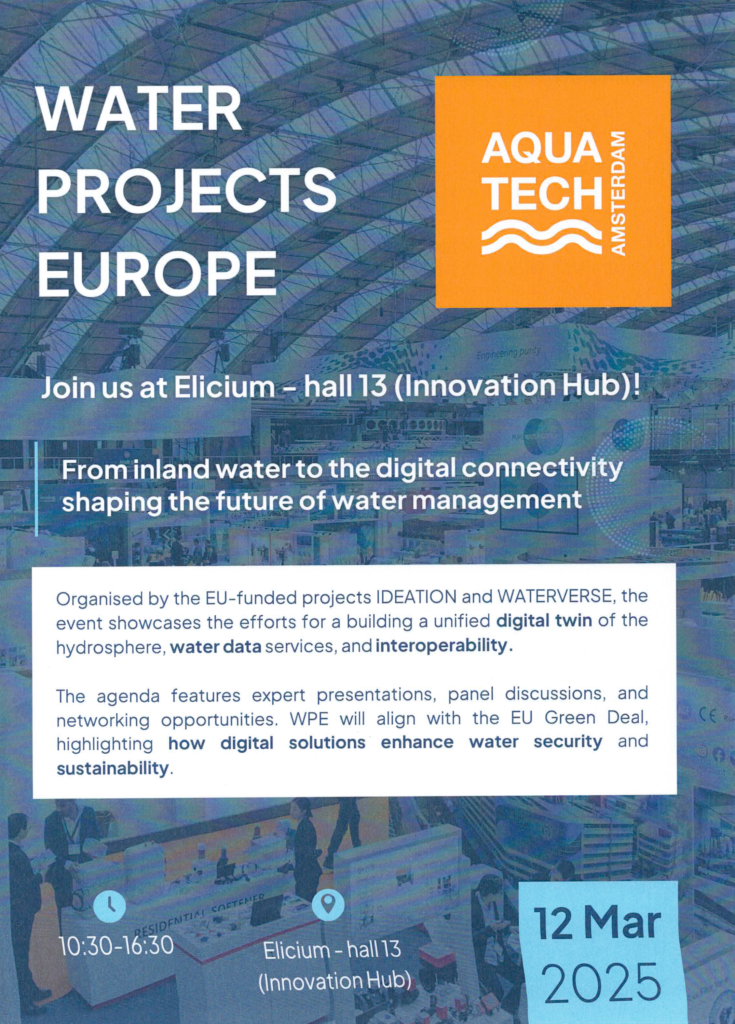
On March 12th, Luis Sánchez, Technical Coordinator of the SEDIMARK project, had the privilege of presenting at the Water Projects Europe Workshop on From Inland Water to Digital Connectivity: Shaping the Future of Water Management. The presentation was part of the session on Understanding Digital Water Management and Interoperability, focused on the SEDIMARK Project and its innovative approach that could fit into the needs and challenges of transforming water management through digital technologies.
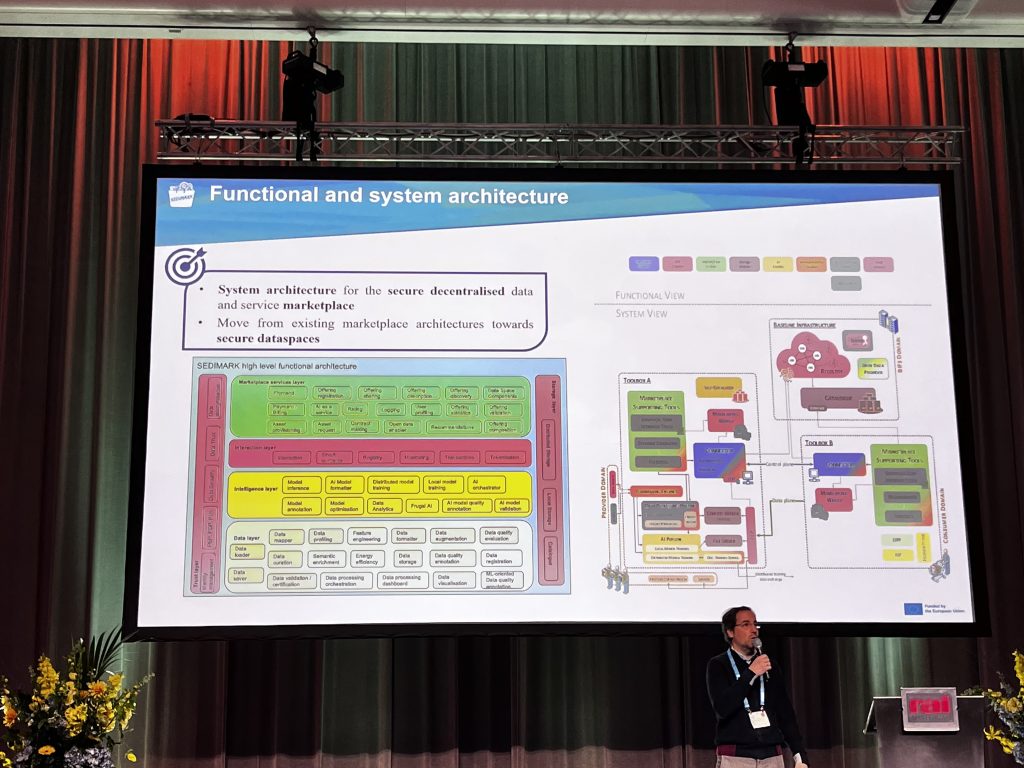
The SEDIMARK Project is developing a Distributed, Intelligent and Trustworthy Data Marketplace based on the Data Spaces paradigm. This platform enables seamless data sharing between stakeholders, such as governments, utilities, and researchers, by focusing on data interoperability, quality, and trustworthiness. By ensuring that data is accurate, transparent, and secure, SEDIMARK empowers informed decision-making, improving water resource management and fostering collaboration across sectors.
The SEDIMARK Project is pioneering the development of a Distributed and Intelligent Data Marketplace, a cutting-edge platform aimed at facilitating the seamless exchange of water-related data across various stakeholders, including governments, water utilities, researchers, and private companies. At the heart of SEDIMARK lies the Data Spaces paradigm—a new approach that enables data to be shared and exchanged across a range of sectors and industries while ensuring data privacy and security.
A primary goal of the project is to enhance data interoperability—ensuring that data from various sources can work together seamlessly to support decision-making. By leveraging data interoperability, SEDIMARK enables the integration of disparate datasets such as environmental data, water consumption data, and climate-related data, empowering stakeholders to make informed decisions based on a complete picture of water systems.
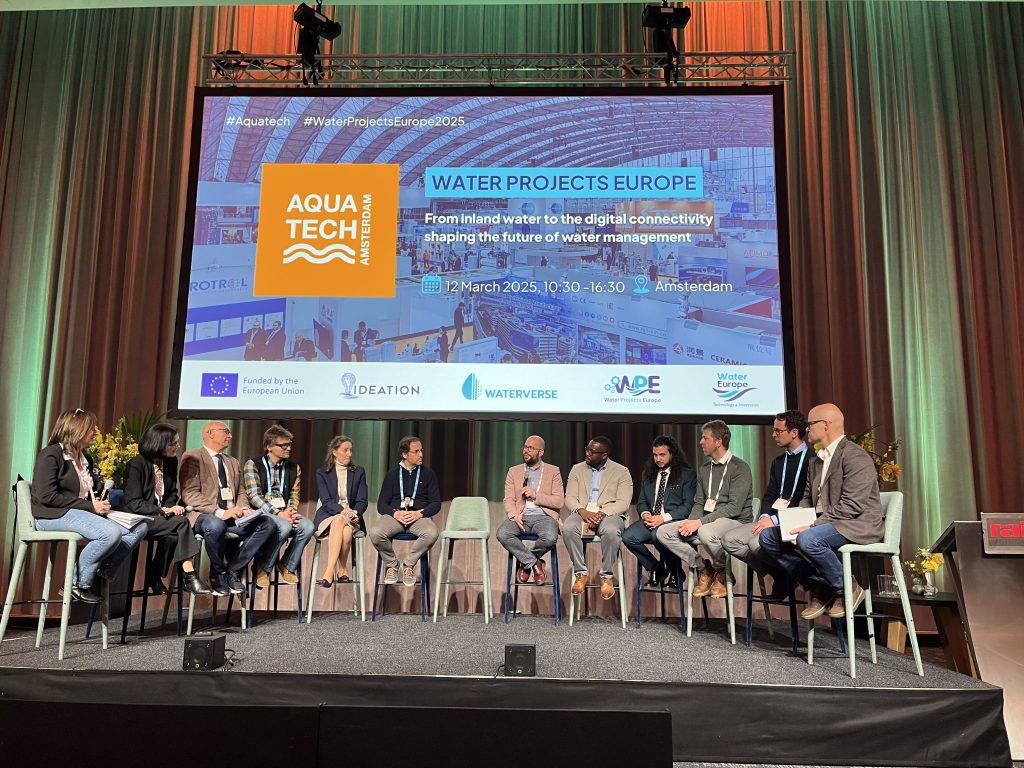
But, as we all know, data is only valuable if it’s trustworthy. That’s why the SEDIMARK Project places a significant focus on data quality and trustworthiness. Trust is a key enabler for the success of digital water management systems, and ensuring data quality, provenance, and transparency is essential to building that trust. The project employs mechanisms that ensure that data shared within the marketplace is accurate, verifiable, and useful for the end-users. One of the most exciting aspects of the SEDIMARK platform is its ability to support data exchange scenarios. Whether it's about sharing water quality data from rivers, monitoring urban water usage, or assessing the impact of climate change on freshwater availability, SEDIMARK offers a mechanism for exchanging this critical data across borders and sectors, thereby enabling better decision-making and more efficient water management practices.
Following the presentation, a dynamic closing round-table with other experts in the field of digital water management was organized. The significant barriers and challenges that organizations and stakeholders face when trying to implement digital and smart water management solutions were explored.
One of the major challenges that were discussed was the lack of standardized data formats and protocols, which often hinders data interoperability. Despite advancements in technology, different water management systems often use incompatible data formats, making it difficult for stakeholders to share and use the data effectively. Standardizing data formats and establishing common protocols for data exchange could go a long way in overcoming this issue.
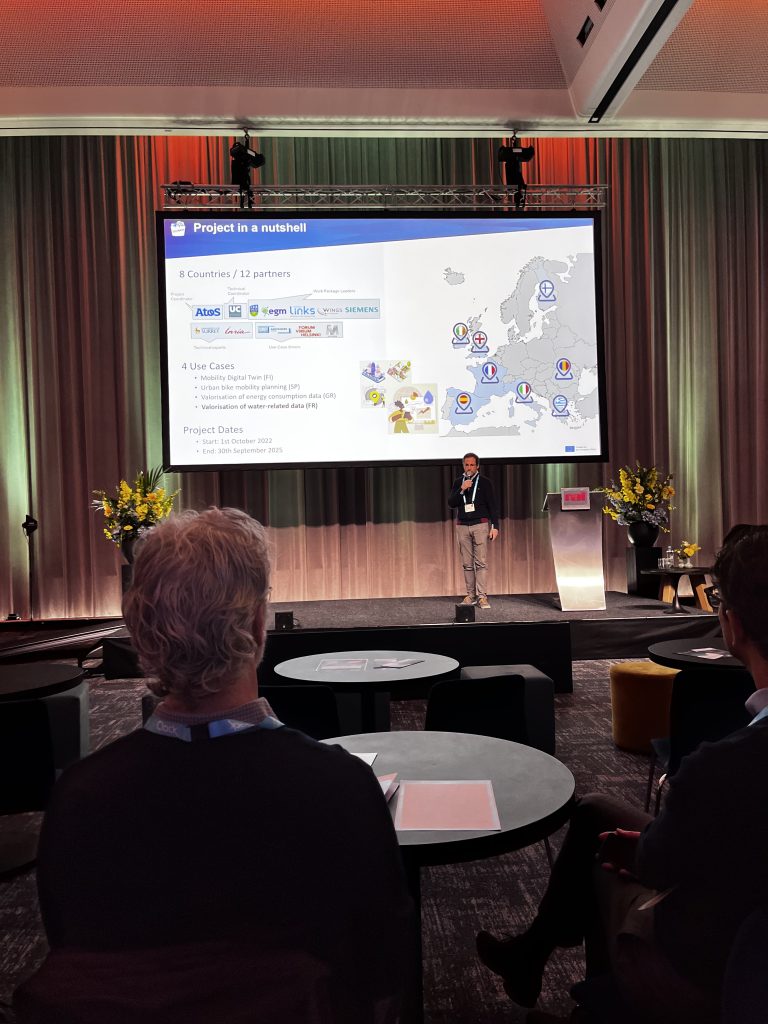
Another challenge raised was the resistance to adopting new technologies. Many organizations, especially in more traditional sectors like water management, are hesitant to embrace digital transformation due to concerns about cost, complexity, and the learning curve associated with new systems. Overcoming this resistance requires demonstrating the tangible benefits of digital water management solutions, such as improved resource efficiency, cost savings, and better environmental outcomes.
Lastly, the issue of data privacy and security was discussed. As water management systems become more interconnected, the amount of data being exchanged increases exponentially. This raises concerns about the protection of sensitive data, such as personal information or proprietary business data. Ensuring robust security protocols and establishing clear guidelines around data ownership and access are critical for fostering trust among stakeholders.
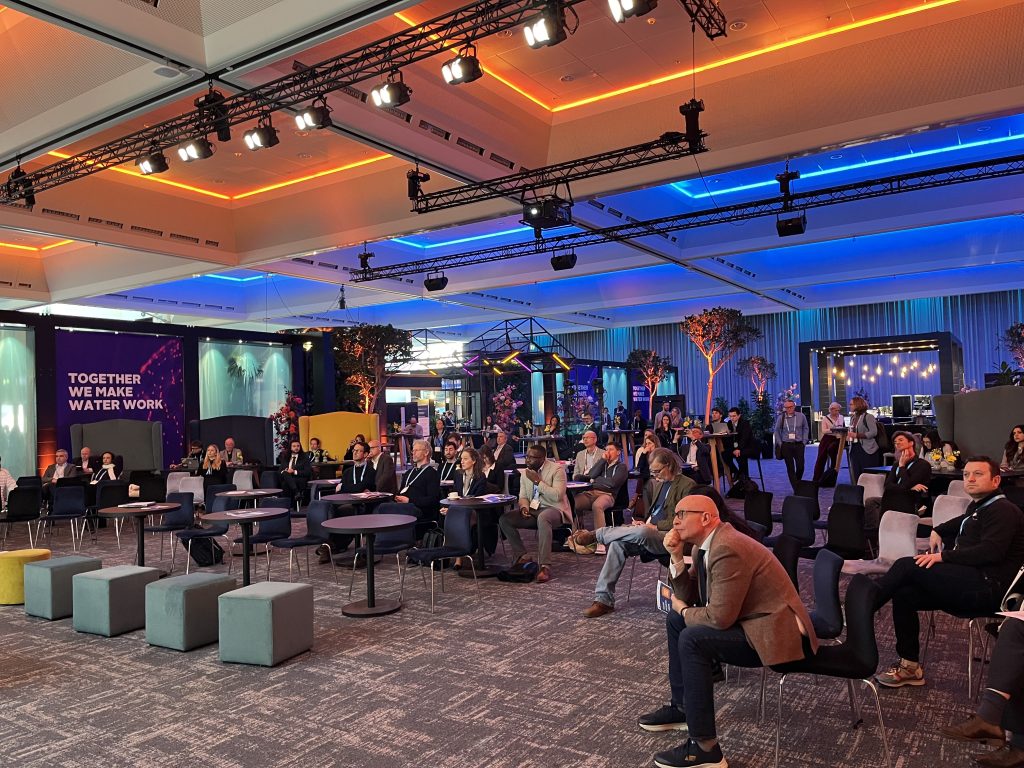
In conclusion, the workshop provided a valuable opportunity to discuss how digital connectivity is shaping the future of water management. The SEDIMARK Project and similar initiatives are laying the groundwork for a more interconnected, efficient, and sustainable approach to managing water resources. However, the road to fully digitalized water management systems is not without its challenges. Overcoming barriers like data interoperability, technology adoption, and data security will require collaborative efforts from governments, industry leaders, and technology developers.
Quoting our Technical Coordinator: “As I left the workshop, I felt optimistic about the progress being made in digital water management and excited about the role that the technological enablers that projects like SEDIMARK are developing will play in the future of sustainable water use and management.”